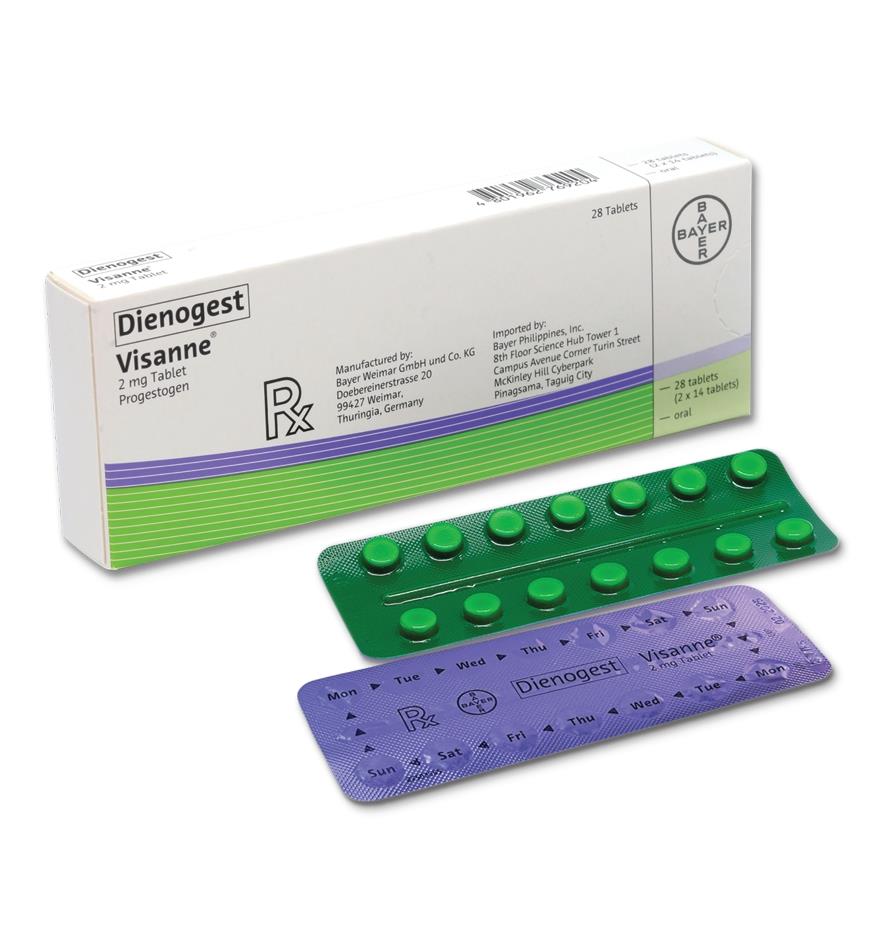
Is Visanne effective for adenomyosis?
Visanne® (dienogest) is a progesterone-based medication commonly prescribed for adenomyosis treatment. It works by suppressing estrogen, which helps reduce inflammation and pain caused by adenomyosis tissue.
How effective is Visanne?
Clinical studies and real-world experience show that Visanne can be effective for symptom control, particularly:
- Reduction in period pain
- Improvement in chronic pelvic pain
- Lighter menstrual bleeding
- Some women stop having periods altogether
Many women notice improvement within 1–3 months of starting treatment.
However, Visanne is a symptom-management treatment, not a cure. Adenomyosis tissue remains in the uterus, and symptoms often return once the medication is stopped.
Limitations of Visanne for adenomyosis
While Visanne is helpful for some women, it has important limitations:
- Does not remove adenomyosis
- Minimal reduction in uterine size
- Symptoms may recur after cessation
- Long-term medication is often required
For women with moderate to severe adenomyosis, medication alone may not provide adequate or lasting relief.
Find out how UAE can “kill off” adenomyosis tissue without sugery .
Visanne side effects: what patients should know
Concerns about side effects are one of the most common reasons women search for information about Visanne
Common side effects
- Irregular bleeding or spotting
- Bloating
- Breast tenderness
- Headaches
- Acne or oily skin
Mood-related side effects (important)
- Low mood
- Emotional changes
- Reduced motivation or energy
Women with a history of depression, anxiety, or hormonal sensitivity may be more affected and should discuss this carefully before starting Visanne.
Other considerations
- Mild weight changes can occur
- Libido may decrease in some women
- Bone density loss is minimal compared with older hormonal injections, but long-term monitoring may be advised
If side effects significantly impact quality of life, alternative treatments should be considered.
Find out how UAE can be used as a non-hormone treatment for adenomyosis
Who is unlikely to respond well to Visanne?
Visanne may be less effective in women who have:
- Severe or bulky adenomyosis
- Constant pelvic pain (not just during periods)
- Pressure or “heaviness” symptoms
- Failed previous progesterone or hormonal treatments
- Significant side effects from hormonal medications
In these cases, continuing medical therapy may delay more effective treatment.
An effective alternative to hysterectomy: UAE for adenomyosis
For women who:
- Do not respond adequately to Visanne, or
- Cannot tolerate its side effects, or
- Prefer to avoid long-term hormonal medication
Uterine Artery Embolisation (UAE) is an effective alternative to hysterectomy.
UAE for adenomyosis in Sydney
UAE in Sydney is a minimally invasive, image-guided procedure that reduces blood flow to adenomyosis tissue, leading to symptom improvement while preserving the uterus.
Benefits of UAE
- Significant reduction in pain and heavy bleeding
- Treats adenomyosis directly
- Avoids major surgery
- Shorter recovery time than hysterectomy
- Uterus preserved
Many women who have failed Visanne experience substantial and lasting improvement after UAE.
Choosing the right adenomyosis treatment in Sydney
There is no single best treatment for everyone. The most appropriate adenomyosis treatment in Sydney depends on:
- Severity of symptoms
- Uterine size and imaging findings
- Response to previous treatments
- Tolerance of hormonal side effects
- Personal preference to avoid hysterectomy
At Sydney Fibroid Clinic, we specialise in uterus-preserving adenomyosis treatment, including UAE, and provide balanced advice on medical versus procedural options.
Check out all your adenomhyosis treamtnet options, pros and cons of each
Next steps
If you are:
- Searching for information about Visanne effectiveness
- Concerned about Visanne side effects
- Looking for an effective alternative to hysterectomy
- Interested in UAE for adenomyosis in Sydney
📞 Contact Sydney Fibroid Clinic to arrange a consultation and discuss whether UAE is suitable for you.
References – Adenomyosis Treatment, Visanne®, and UAE
Visanne (Dienogest) – Effectiveness & Side Effects
- Osuga Y, et al.
Dienogest is effective in the treatment of painful symptoms associated with adenomyosis.
Journal of Obstetrics and Gynaecology Research. 2017;43(9):1441–1448. - Miyake T, et al.
Long-term use of dienogest for the treatment of adenomyosis.
Journal of Obstetrics and Gynaecology Research. 2014;40(2):445–453. - Younes G, Tulandi T.
Effects of progestins on adenomyosis.
Best Practice & Research Clinical Obstetrics and Gynaecology. 2018;51:75–86. - NICE Guideline NG88
Heavy menstrual bleeding: assessment and management.
National Institute for Health and Care Excellence (UK). - Vercellini P, et al.
Adenomyosis: epidemiological factors, pathogenesis, and clinical features.
Best Practice & Research Clinical Obstetrics and Gynaecology. 2019;59:1–17.
Visanne – Mood Effects and Tolerability
- Strowitzki T, et al.
Safety and tolerability of dienogest in long-term treatment.
Archives of Gynecology and Obstetrics. 2010;282(2):191–201. - Brown J, Farquhar C.
Endometriosis: an overview of Cochrane Reviews.
Cochrane Database of Systematic Reviews. 2014.
Uterine Artery Embolisation (UAE) for Adenomyosis – Sydney Fibroid Clinic Experience
- Liang E, et al.
Uterine artery embolisation for the treatment of adenomyosis: clinical outcomes and patient satisfaction.
Australian and New Zealand Journal of Obstetrics and Gynaecology (ANZJOG). 2018. - Liang E, et al.
Mid- to long-term outcomes of uterine artery embolisation for adenomyosis.
Australian and New Zealand Journal of Obstetrics and Gynaecology (ANZJOG). 2021.
UAE as an Alternative to Hysterectomy / Uterus Preservation
- Royal College of Obstetricians and Gynaecologists (RCOG)
Clinical recommendations on uterine artery embolisation for benign uterine disease. - Interventional Radiology Society of Australasia (IRSA)
Patient and clinician guidance on uterine artery embolisation.