
Adenomyosis

Adenomyosis is a condition in which the inner lining of the uterus breaks through the muscle wall of the uterus. Though benign, adenomyosis may cause heavy periods, menstrual cramps, abdominal pressure and bloating – creating a negative impact on overall quality of life.

SydneyFibroidClinic_Adenomyosis
Watch this video about Adenomyosis: symptoms and treatment options.

What Is Adenomyosis?

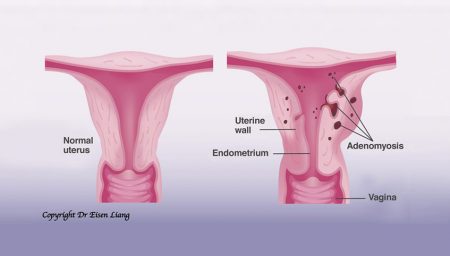
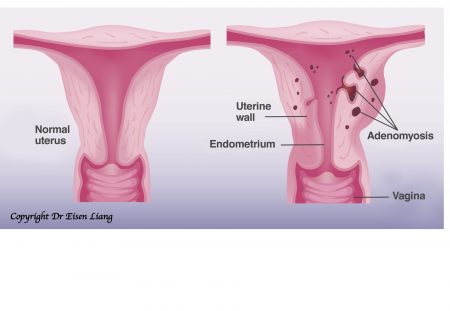
Adenomyosis is a benign (non-cancerous) disease of the uterus. It occurs due to the migration of glandular endometrial tissue into the muscle layer.

Normally, glandular endometrial tissue lines the cavity of the uterus. This layer thickens during each menstrual cycle and is shed at the end of the cycle. Shedding of the endometrial layer, together with bleeding, produces menses every month. But the embedding of endometrial glandular tissue into the muscle layer can cause heavy menstrual bleeding and period pain.

Adenomyosis Diagnosis

Typical adenomyosis symptoms are heavy and painful menstrual periods, premenstrual bloating or pain, painful intercourse, or chronic pelvic pain. When examined by a doctor, the uterus maybe enlarged and tender to touch.

As these clinical features are rather non-specific, accurate diagnosis of adenomyosis may be difficult. Ultrasound findings are generally quite subtle and adenomyosis may be missed or mistaken for fibroids. MRI is more definitive in diagnosing adenomyosis symptoms than ultrasound – especially when fibroids are also present. There is no specific blood test available for adenomyosis.

Watch Sydney Fibroid Clinic Youtube Channel on Adenomyosis

Adenomyosis Explained

Adenomyosis Treatment Options

Watch the two videos below. At Sydney Fibroid Clinic, adenomyosis treatment is tailored to each woman’s needs based on her symptoms and personal preferences. SFC specialises in applying  uterine artery embolisation as a minimally invasive alternative to hysterectomy, and we often combine  medical treatments and UAE  to help women to avoid hysterectomy.  There is often no single “best” treatment for everyone, and a detailed discussion with a specialist experienced in a combination of adenomyosis treatment options is important to fully understand the benefits, risks, recovery time, and long-term outcomes of each option,  to work out  the most suitable treatment for you..

Adenomyosis Treatment Videos

Uterine Artery Embolisation (UAE)


Medical Therapy for Adenomyosis

Medical therapy for adenomyosis refers to medications or pills aimed at easing symptoms. These treatments, however, are

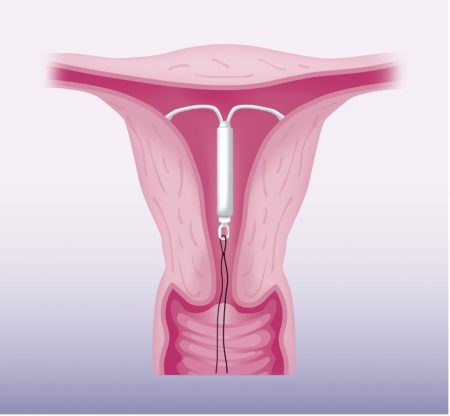
Mirena IUD for Adenomyosis

In A Nutshell Mirena is a progestogen-releasing contraceptive IUD. Mirena alleviates adenomyosis-related HMB and

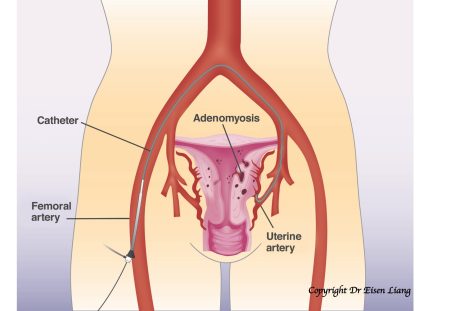
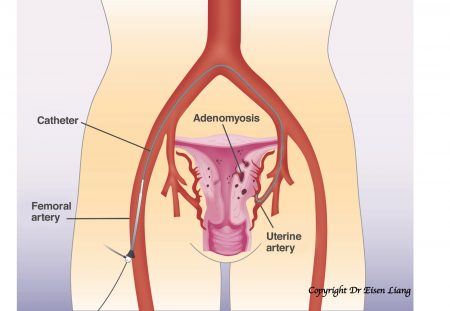
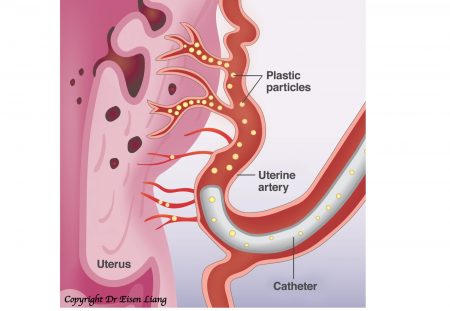
A small catheter is navigated to the artery of the uterus during a UAE.
Uterine Artery Embolisation for Adenomyosis

UAE is potentially a life changing yet simple procedure for many women without resorting to hysterectomy. Uterine arter

Endometrial Abaltion
Endometrial Ablation for Adenomyosis

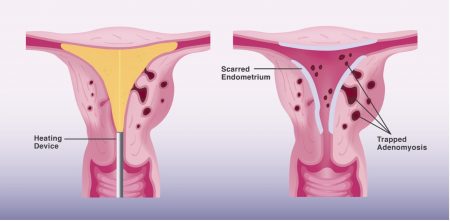
Endometrial ablation uses heat energy to destroy the inner lining of the uterus, so bleeding will be reduced. However

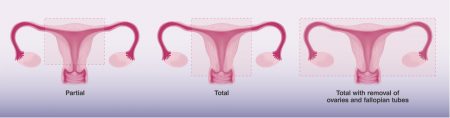
Partial and total hysterectomy with removal of ovaries and fallopian tubes.
Hysterectomy for Adenomyosis

A hysterectomy is a surgical operation in which all or part of the uterus is removed. Hysterectomy is a major operati

Adenomyosis Explained
Surgical Removal of Adenomyosis

Generally speaking, adenomyosis is not suitable for surgical removal. Adenomyosis is often a diffuse infiltrative proces

FAQs about Uterine Artery Embolisation (UAE)

UAE is an effective treatment for adenomyosis related heavy menstrual bleeding and period pain. UAE is done under local anaesthetic requiring one night stay in hospital. UAE is a non-surgical alternative to hysterectomy

  • Video How Does UAE treat Adenomyosis?
  • How effective is UAE?

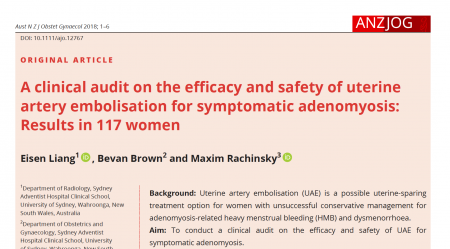
    Screenshot of Dr Liang's article on the efficacy and safety of Uterine Artery Embolization.

    UAE is the probably the most effective uterine-preserving treatment. Sydney Fibroid Clinic’s own patient satisfaction rate is 90% – meaning 90% of women treated were happy or very happy with the outcome of their UAE in relieving heavy menstrual bleeding and period pain. Only 5% of treated women have gone on to have a hysterectomy. In other words, 95% of women treated were able to avoid a hysterectomy. Our paper can be viewed at the Doctors’ Resources section.

    The treatment result seems to be durable and the 5-year symptom recurrence rate is around 11%.

    Check out our Case Studies

    Read women’s stories 


  • How is UAE performed?

    Insertion of a small 1 – 2mm diameter catheter into the femoral artery in the groin.

    Uterine artery embolisation is performed by an interventional radiologist. During the procedure, tiny particles are injected inside the uterine arteries to block the blood flow, thereby starving the adenomyosis tissue, causing shrinkage and alleviating symptoms. Only a tiny nick on the skin is needed to allow insertion of a small, 1 – 2mm diameter catheter into the femoral artery in the groin. This catheter is advanced into the arteries of the uterus under X-ray guidance.

  • How does UAE work exactly?

    During UAE, small particles are injected to block the blood vessels supplying the uterus.

    A non-pregnant uterus weighs about 60 – 100 grams. During pregnancy, the uterus can enlarge enormously, opening up numerous blood vessels that are normally dormant. During UAE, small particles are injected to block the blood vessels supplying the uterus. Normal uterine tissue has plenty of dormant blood vessels it can recruit to remain alive and viable. However, as adenomyotic tissue does not have the capacity to recruit dormant vessels and is starved without oxygen and nutrients, it will therefore shrink and die.

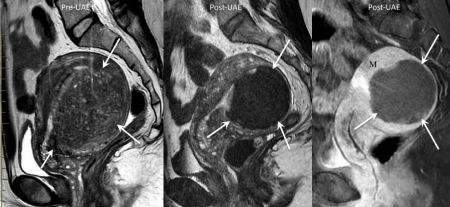
    Pre-UAE MRI vs six months post-UAE MRI showed scarring of focal adenomyosis and shrinkage.

  • What are the advantages of UAE?

    UAE is a minimally invasive procedure, especially when compared with a hysterectomy. Symptoms can be effectively treated without the requirement to surgically remove the uterus. Risks of blood transfusion, wound infections and other potential complications are eliminated and there is no need for general anaesthetic. UAE also requires a shorter hospital stay (1 – 2 days versus 5 – 7 days) and much shorter convalescence (1 week versus 4 – 6 weeks) before returning to work or normal activities.

  • Is UAE still experimental?

    No. UAE has been long been used to treat postpartum haemorrhage. UAE for fibroids has been performed since 1995. Many studies have demonstrated safety and effectiveness in treating adenomyosis symptoms. Our own studies published in the 2018 ANZ Journal of Obstetrics and Gynaecology was one of the largest case series and reported the highest clinical success rate.

  • Is UAE painful?

    The UAE procedure itself is essentially pain-free. Local anaesthetic at the groin may sting for about ten seconds before taking effect. Soon after embolisation, pain (like period pain) may be experienced. The degree varies from person to person.

    Our robust pain control protocol has worked well for many previous patients for more than ten years, including patient-controlled analgesia (PCA) administered through an IV drip. Pain is usually worst for the first 12 hours and PCA is not usually required the following day.

    Take home medications typically include regular Panadol and nonsteroidal anti-inflammatory drugs (NSAIDs). Additional long and short acting pain medications are also supplied. Pain should subside within 4 – 5 days and patients should anticipate returning to normal activities about 7 days after the procedure.

  • What are the risks of UAE?

    UAE is a minimally invasive procedure. It is very safe, especially when compared with major surgery.

    Procedural-related complications, such as spillage of particles away from uterine artery and vessel injury at the groin are very rare, each occurring in less than 1% of patients. Infection of the uterus (endometritis) is also rare (3%). Bladder infection related to catheterisation is 
also around 3 %. This infection can be treated with oral antibiotics. No major complications have been reported in our studies.

  • Will I still get my period after UAE?

    Transient loss of periods may occur in 5 – 10% of patients after UAE. Younger patients tend to regain their period within six months.

    Ovarian failure resulting in menopause occurs in 1- 3% of women younger than 40, but more frequently (7- 14%) in women aged 45+. This may reflect the fact that women in their mid-40s and up are already nearing menopause.

  • Is pregnancy possible after UAE for adenomyosis?

    This is a complex issue, which currently lacks research data in this area. It is known that pregnancy with adenomyosis may be difficult. There is a higher rate of miscarriage and pre-term delivery, and a lower success rate with IVF.

    Pregnancy after UAE for adenomyosis can be complicated. A uterus with adenomyosis is not normal to start with. One cannot be sure if the problem with fertility and pregnancy is related to the pre-existing adenomyosis or the UAE treatment. UAE can be used as an uterine-preserving procedure to treat symptoms of adenomyosis, but is yet to be shown as a fertility-enhancing procedure. Therefore, fertility and pregnancy cannot be guaranteed. In other words, it is highly likely that the uterus can be conserved after UAE, but we cannot predict how well the uterus will carry a pregnancy. We do however have many cases of successful pregnancies after UAE for adenomyosis.

  • Is UAE effective for fibroids?

    Yes. International studies and Sydney Fibroid Clinic’s own experience have demonstrated UAE (also known as UFE) is highly effective for fibroids as well.

 In fact, around 50% of women treated for adenomyosis also have one or more fibroids. Both adenomyosis and fibroids are common, and therefore they quite often coexist.

    More information on Sydney Fibroid Clinic’s fibroids treatments can be found here.

    UFE For Fibroids

  • What are the plastic particles used for UAE?

    The PVA (Polyvinyl Alcohol) particles used for UAE are made from pure plastic, with no additives. Pure plastic is inert, meaning it doesn’t interact, chemically or biochemically, with our body. There are many commercially available blocking (embolic) agents thatcan be used for UAE. We have chosen PVA and have been using it to treat fibroid and adenomyosis for nearly 15 years without any issues.  PVA is biocompatible and chemically stable ( ie not breaking down to harmful molecules). PVA is used in making contact lenses and medication capsules. PVA has been used as an embolic agent since the 1970s. There have been no safety issues raised or reported regarding the use of PVA particles. PVA particles are lodged and trapped in the small blood vessels that they block and become part of the scar tissues that are formed following the death of adenomyotic tissue, so they will not end up elsewhere in the body.

    Plastics as a material is a concern for many people. Plastics have got a bad name due to the additives put in by the manufacturers. To solidify plastic products, they add reinforcing agents, such as bisphenol A (BPA), and plasticizers, such as phthalates, to make them soft and flexible. During the production of furniture and electronics, fire retardants are added to make them less flammable. Altogether there are many plastic additives that consumers come into contact with on a daily basis, some of which are harmful to your health and have been found in human urine and blood. For example, BPA is suspected of causing hormone disruption and is associated with metabolic and reproductive diseases, as well as cancers.

    The pure plastic (PVA) that we use for UAE does not have additives and therefore safe.


  • Am I a candidate for UAE?

    If you’re troubled by the symptoms of uterine adenomyosis and conservative treatments have not been effective, UAE could be an ideal treatment – especially if you wish to avoid a hysterectomy.

    For more information on whether you’re a suitable candidate for UAE, call to discuss or book a consultation with Dr Eisen Liang.

    Enquire About Adenomyosis Treatment

  • What pre-procedural evaluations are required for UAE?


    All patients are required to have a pre-procedure consultation with Dr Liang. This allows us to obtain a gynaecologic and general medical history, review imaging findings and discuss the procedure with you.

    If your ultrasound is uncertain about the diagnosis or a tumour (fibroid) is reported,  MRI of the uterus is also required to confirm the diagnosis of adenomyosis and to make sure the fibroid is not cancerous. We require the MRI be done at our appointed facilities that are familiar with uterine imaging and reporting. An MRI is the most accurate imaging test in assessing uterine pathologies and MRI is also used as a baseline for follow-up comparison at six months.

  • What do I do on the day of my UAE?

    On the day of your procedure, you’ll need to avoid solid food for 6 hours. Clear fluid and medications are allowed up until the time of procedure.

    Nursing staff will start an intravenous line to give you fluid, sedatives and pain relief medications. We’ll also need to place a catheter in your bladder, to ensure your bladder remains empty during the procedure. As your bladder is in front of your uterus, X-ray dye collected in the bladder will obscure our view.

  • How do I recover after UAE?

    After your procedure, you’ll need to lie still for 2 hours to prevent bleeding in the groin.

    You may experience pain and nausea. Medications are prescribed to control these symptoms and you may ask the nurses if you require them. The pain is worse in the first 12-18 hours. You’ll be given a patient-controlled analgesia (PCA) pump that allows you to administer the doses you need. You are allowed to eat and drink, but you might be nauseous and you might not have any appetite.

    Typically, you will no longer require the PCA the next morning and the bladder catheter can be removed to allow you to move around and to shower. The majority of our patients are able go home, though some might need to stay another night until the pain is under control and oral fluid intake is adequate.

    Take home medications typically include regular Panadol and nonsteroidal anti-inflammatory drugs (NSAIDs). Additional strong pain medications are also supplied. Coloxyl with Senna is also provided to prevent constipation.

In the next few days, you may experience residual pain, lethargy and low-grade fever. You should be well enough to go to the local shops on days 4 – 5. You should anticipate returning to work and normal activities about 1 week after your procedure.

    Some vaginal discharge and minor bleeding is normal after UAE.

  • What follow-ups are required after UAE?


    We will touch base with you via email at 3 months post UAE to check your clinical progress. You’ll need to see our doctors for review at 6 month with a progress MRI ( unless you only had ultrasound prior to UAE).

  • Do I need to see a gynaecologist about UAE?


    Sydney Fibroid Clinic believes in a multidisciplinary approach to deliver the best care for adenomyosis-related symptoms. Therefore, we share the care with your GP and gynaecologist.

    You might have seen your own gynaecologist, who may or may not be familiar with UAE. Dr Liang is happy to discuss your case with your gynaecologist if he or she wishes to do so. Otherwise, we are happy to see you to provide you with a second opinion.

    If you have not seen your own gynaecologist, Dr Liang is willing to see you and discuss all your treatment options. If necessary, Dr Liang will invite his gynaecologist associate to conduct a joint consultation to discuss your case.

  • Are there any problems I need to watch for after UAE?

    There have been no major complications from UAE for adenomyosis. Some women with large focal adenomyosis may shed tissue debris as brownish vaginal discharge – but as long as there is no bad odour to suggest infection, antibiotics will not be needed.

  • How is adenomyosis diagnosed?

    The typical symptoms of uterine adenomyosis include heavy menstrual bleeding, severe period pain, bloating sensation, chronic pelvic pain and pain during sex. When examined by a doctor, the uterus is typically bulky and tender to touch.

    Transvaginal ultrasound can detect adenomyosis but the signs could be subtle and easily missed. When fibroids are also present, adenomyosis is often mistaken as fibroids.

    Adenomyosis is easier to see on MRI than ultrasound. The extent and location of adenomyosis is clearly mapped on the MRI.  Adenomyosis are much better distinguished from fibroids on MRI than ultrasound.

    Unfortunately MRI of the uterus for non-cancerous conditions are not funded by Medicare.

  • Can adenomyosis be removed surgically?

    Normal vs adenomyosis uterus.

    Generally speaking, adenomyosis is not suitable for surgical removal. Adenomyosis is an infiltrative process. Unlike fibroids, which can be easily separated from the normal uterine wall, adenomyotic tissue does not have a clear boundary with the normal myometrium.

    Surgeons find it difficult to determine where adenomyosis stops and where the normal myometrium begins. The removal is either incomplete, leaving behind adenomyotic tissue – which can continue to grow and cause problems – or larger than necessary, so that the excessive amount of normal uterus is removed.

UFE vs hysterectomy

Contact Sydney Fibroid Clinic

If you’re troubled by symptoms of uterine adenomyosis and simple measures have not been effective, UAE could be a viable treatment for you; especially if you wish to preserve your uterus, avoid major surgery and recover quickly.

For more information on whether you’re a suitable candidate for UAE, chat with us online, come to our information nights or book a consultation with Dr Eisen Liang.

Contact Sydney Fibroid Clinic
If you’re troubled by symptoms of uterine adenomyosis and simple measures have not been effective, UAE could be a viable treatment for you; especially if you wish to preserve your uterus, avoid major surgery and recover quickly.
For more information on whether you’re a suitable candidate for UAE, chat with us online, come to our information nights or book a consultation with Dr Eisen Liang.
Enquire About Information Nights
Enquire About Adenomyosis Treatment

Adenomyosis Relief

UAE is a local anaesthetic procedure to shut down blood supply by injecting tiny particles into uterine arteries. Adenomyosis tissues shrink and die. Normal uterine muscle is not harmed due to plentiful dormant collateral vessel. Pregnancy is possible in some cases.

See our Adenomyosis UAE case studies below.

Adenomyosis Case Studies

  • Case Study 1

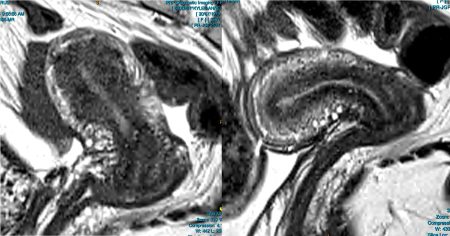
    Pre-UAE MRI confirmed adenomyosis, showing multiple bright foci in the wall of the uterus.

    A 45-year-old optometrist suffered from severe menstrual bleeding and period pain. Her pre-UAE MRI confirmed adenomyosis, showing multiple bright foci in the wall of the uterus – signifying migration of endometrial tissue from the lining of the cavity. Her post-UAE MRI showed disappearance of the bright foci. Her periods are now much lighter and her pain has been markedly reduced.

  • Case Study 2

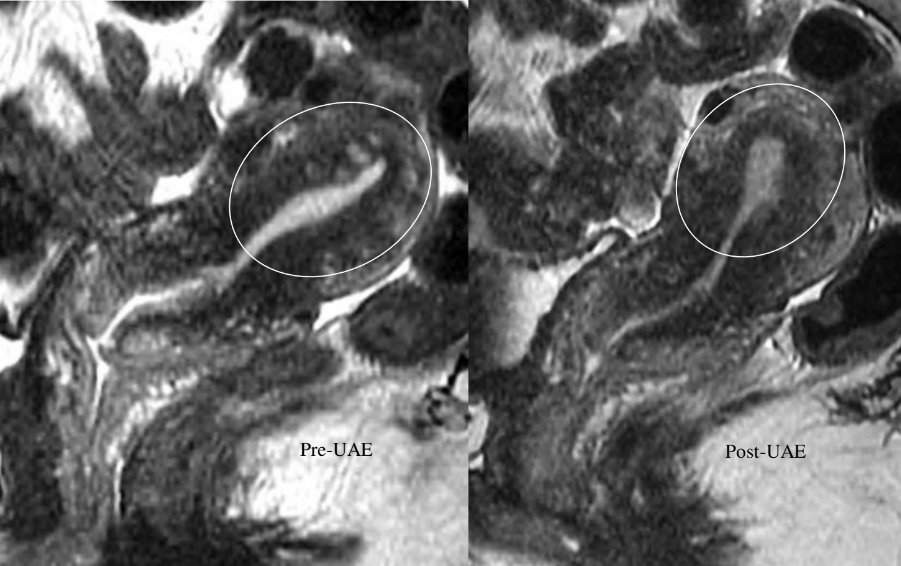
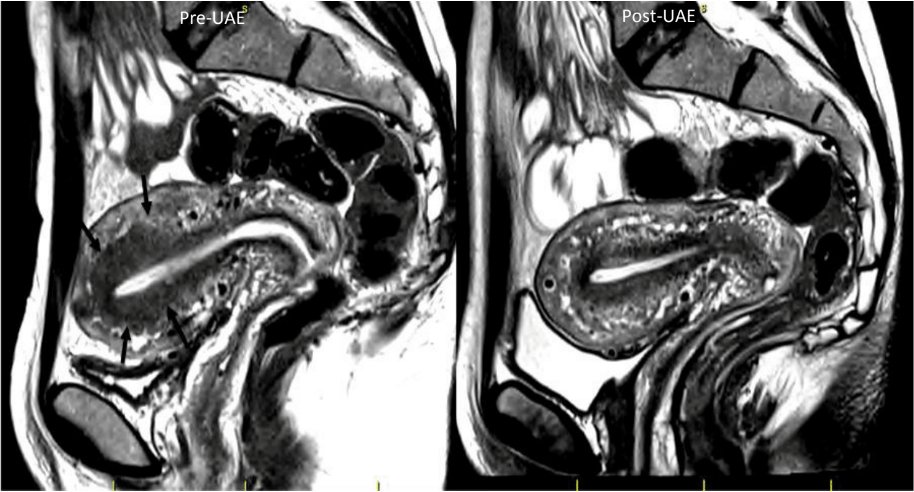
    An MRI six months post-UAE showed normalisation of the junctional zone.

    A 28-year-old mother of three young children suffered severe menstrual bleeding, tiredness, exhaustion, and incapacitating pain for a few days each month. She had tried and failed NSAIDs, and was changing super absorbent pads every two hours whilst on tranexamic acid. Mirena IUD was not tolerated, due to acne and continuous spotting. Throughout this ordeal, her uterus was reported as normal on ultrasound.

    Because of her severe symptoms, an MRI was eventually performed. It showed thickening of the junctional zone, confirming adenomyosis and she was treated with uterine artery embolisation. An MRI six months post-UAE showed normalisation of the junctional zone. She now has very light, regular periods, her pain is almost completely gone, she is energetic and is able to bike ride with her children. She is very happy with the significant improvement of her quality of life.

  • Case Study 3

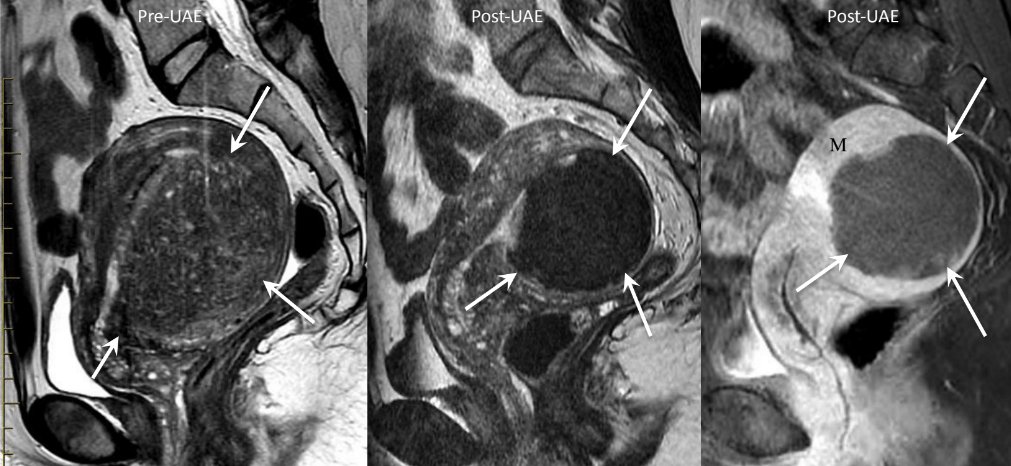
    Pre-UAE MRI vs post-UAE MRI shows scarring of focal adenomyosis and shrinkage from 272ml to 115ml.

    A 45-year-old insurance broker suffered from severe heavy menstrual bleeding and period pain for many years. Tranexamic acid and progestogen were ineffective for her symptoms. She expelled two Mirena IUDs and failed endometrial ablation. Her MRI showed a large area of adenomyosis in the back wall of her uterus and she decided to undergo uterine artery embolisation. Six months post-UAE, her MRI showed scarring of focal adenomyosis and shrinkage from 272ml to 115ml. Her uterine wall is now normal and viable and her periods are light and no longer painful.

  • Case Study 4

    Two Full term pregnancies after successful UAE for adenomyosis

    Two Full term pregnancies after successful UAE for adenomyosis

    37 y/o lady who has not had children suffers from with severe heavy menstrual bleeding and period pain. Mirena has caused continuous bleeding, mood changes, weight gain and acne; Tranexamic acid was not helpful. Her ultrasound was reported as normal. MRI showed diffuse adenomyosis JZ 15mm. She has moderate desire for pregnancy and would prefer to conserve her uterus. She chose UAE to treat her adenomyosis. At 6 months post UAE, JZ has reduced from 15mm to 8 mm. Her heavy menstrual bleeding and period pain have markedly reduced. She had 2 miscarriages and then 2 spontaneous uncomplicated full-term pregnancies at age 40 and 42 , delivering two healthy babies by elective C-section at 39 weeks.

  • Case Study 5

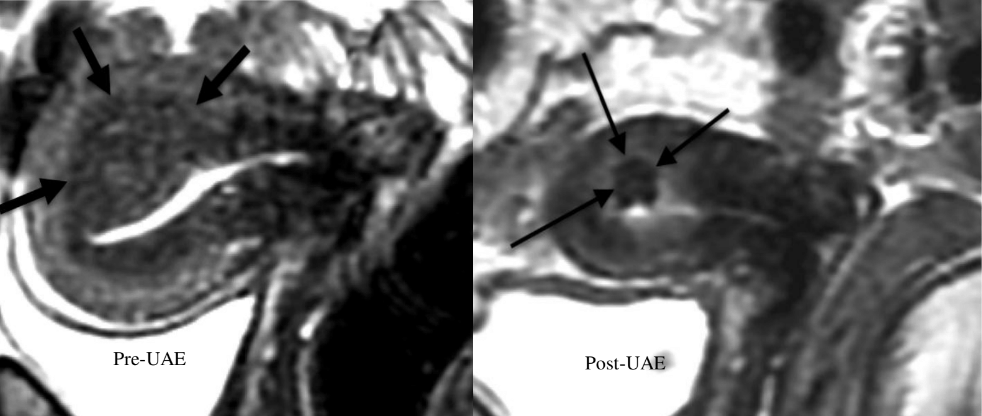
    Post-embolisation MRI at six months showed a dark area of scar tissue.

    A 52-year-old horse breeder with three adult children suffered heavy menstrual bleeding, requiring tampon and pad changes every 30 – 60 minutes. Bleeding occurred for as long as three weeks each month, and cramping period pain left her house-bound and unable to work during periods. Her ultrasound reported a small fibroid in her uterine wall, though it was not enough to explain the severe symptoms.

    An MRI discovered an area of adenomyosis as the real culprit and she underwent UAE to achieve adenomyosis relief. Her post-embolisation MRI at six months showed a dark area of scar tissue. All symptoms resolved. As a very active woman she did not want to have a hysterectomy, and was glad to have chosen UAE as the less invasive option.

Women’s Stories

Sydney Fibroid Clinic has aided a number of women in achieving adenomyosis relief, enjoying regular activities, and leading an ordinary lifestyle.

Read Women's Adenomyosis UAE stories below.

Women’s Stories: UAE for Adenomyosis as an Alternative to Hysterectomy

Women’s Stories: UAE for Adenomyosis as an Alternative to Hysterectomy

-

How good is the UAE procedure for adenomyosis?

NK’s Story

It’s a simple procedure. From the first period after the UAE, they were regular and much shorter, two-three days, with very light flow and next to no pain at all during any stage of my cycle. I soon had the confidence that I would no longer make a mess, get caught out, or suffer with the excruciating pain of the past.

MA’s Story (Registered Nurse)

Since the UAE procedure, my blood loss has reduced by 75%, which has had a huge positive effect on my life. I no longer use super tampons and maternity pads or pass large blood clots.

It was quite a painless procedure.

VB’s Story (Mine Manager)

I was awake the whole time, and the doctor talked me through what he was doing. I had a small amount of pain afterward, which was managed by a PCA. Then I flew home to regional Queensland two days after the procedure. I feel amazing and have had no pain, no bloating, and no more heavy bleeding since the UAE 18 months ago! How fabulous is that? I feel really well and am so grateful to this innovative, non-invasive procedure.

DW’s Story

My friend was also diagnosed with adenomyosis and had a hysterectomy. She suffered an infection from the surgery, was on bed rest for two weeks, and she couldn’t drive for 6 weeks after the surgery. She still isn’t feeling herself months later. Within 6 days of my UAE procedure, I was off on holiday to Singapore and never looked back.

KC’s Story

I had local anaesthetic and was conscious while the doctor did his magic. I didn’t feel a thing. I stayed overnight in hospital and was home by lunchtime the following day.

When I got my next period, I wondered how much pain there would be……but there was none! For the first time in over thirty years, I was pain-free and didn’t need medication.

 The heaviness and number of days I was bleeding have also reduced. I was a bit sceptical initially. Oh, how wrong I was. It’s been eighteen months since the UAE procedure, and it’s been a miracle! Not one bit of pain. No tablets, no heat packs, no days off work, and no leaking through my clothes. And I have energy! My iron levels are at a healthy rate for the first time in years.

HS’s Story

The quality of my life was pretty substandard due to the pain I was suffering during the past six years. It not only permeated my work and social life, but my overall outlook.

Thank you for giving me my life back. Diagnosing me with adenomyosis and offering me UAE as an alternative was a godsend.

My recovery took a week, and I was back at work without any complications.    

I’m happy to say I’m fully functional, and I no longer have to stay home in bed for a full week taking drugs.

My overall experience and the end results have been amazing, to say the least. My quality of life has improved in terms of work productivity, health, and exercise choices. I’ve joined the gym, I’m hiking again, and I’m a “yes” girl on social outings. I feel great.

The debilitating pain has reduced to a faint next-to-nothing experience.

Lessons Learned

  • UAE is a simple local anaesthetic procedure.
  • UAE recovery is quicker than hysterectomy.
  • The results of UAE can be seen soon after the procedure.
  • UAE is potentially life-changing for many women.
Forever Grateful

Forever Grateful

- N.C.

My adenomyosis is completely gone!

In November 2015, after suffering with a disturbingly heavy, painful and highly irregular cycle for a few years I had the Mirena IUD put in. That largely solved the problem for about a year and a half before the problems returned.

Following an MRI, it was discovered that I had rather severe adenomyosis of the entire uterus and a UAE (uterine artery embolisation) was offered to me.

It’s a very simple procedure that, along with removing an overwhelmed Mirena, has from the first period after the procedure resulted in regular and much shorter periods (2 – 3 days), very light flow, next to no pain at all during any stage of my cycle and a confidence that I will no longer make a mess, get caught out or suffer with the excruciating pain of the past.

I had a follow-up MRI to discover my adenomyosis is completely gone! My cycle has remained this way for well over a year now and it has seriously improved my life in a way I could never have dreamed. I will be forever grateful for this treatment.

A New Solution to Severe Pain

A New Solution to Severe Pain

- E.A.

After having the procedure, I feel amazing!

I felt like a prisoner. Over a month, I would probably only get five days of no spotting at all. It was so depressing. Many doctors recommended having my uterus removed, and that was something I didn’t want.

After having the procedure, I feel amazing. I wanted to scream from the rooftops: I finally got an answer to my problems!

I don’t think about these things anymore. I am feeling confident, even in the bedroom, where before there was insecurity never knowing when I would have my period.

Back to Before

Back to Before

- R.G.

After the birth of my second child, I started to experience painful, heavy periods and large blood clots.  The pain was significantly worse when I needed to clear my bowel, especially if I was constipated. I was told that this was normal after natural child birth and that it may or may not get better. Before having children, my period was normal and regular, with minimal pain.

I endured these painful periods for years before going to the doctor searching for the cause. I felt it was not normal and something was not right. It was in June of 2012 when I visited the doctor complaining of painful period and excess bleeding. The doctor performed an ultrasound and the results were normal in their report.

I continued to endure pain until 2014, when I changed doctors and decided that another opinion may change the results and determine the cause of the pain. In November of 2014, I had a CT scan of my abdomen and pelvis and an ultrasound of my pelvis. They suspected diverticular disease. The results were no significant diverticular disease or bowel disease.

It wasn’t until January 2016 that I had enough and insisted I be referred to a specialist. I had another ultrasound and a referral to a Sydney Fibroid Clinic gynaecologist. He heard my symptoms and took one look at my ultrasound and diagnosed me. He suspected adenomyosis. He gave me three options: which were Mirena, uterine artery embolisation or, as a last resort, a hysterectomy.

I was so relieved to hear that something was wrong and that it was treatable. I considered the Mirena, but ultimately decided on uterine artery embolisation. I was then booked in for an MRI to confirm that I was suffering from adenomyosis and was referred to the Sydney Fibroid Clinic Interventional Radiologist, who confirmed my diagnosis. I ended up having the UAE procedure in February of 2016.

I immediately saw a change in my period after the procedure. I have had three periods since, and they have been normal. I am now back to when I was before I had children.

SFC Changed my Life

SFC Changed my Life

- K.B.

I wasn’t aware that my normal was, in fact, not the average period…

For more than 15 years I’ve suffered with heavy periods. My periods caused me to have low iron, which caused a number of other issues. I have seen numerous doctors during this time – specialists, GPs and even homeopaths trying to understand why my periods were causing such disruption to my life.

I wasn’t really aware that my normal was in fact not the average period until a discussion with my friend in my late 20s. For me, bleeding through a super tampon and super pads together and then my clothes was a normal period. I can recall a number of situations when I had to leave work due to excessive bleeding and have used so many sick days during my heavy days of my period because I literally felt I couldn’t leave the house without severe embarrassment.

For my husband and family, they had to schedule activities around my period. I wouldn’t be able to take my kids to weekend activities due to the excessive bleeding. The pain was a secondary issue to the heavy bleeding, which was the most distressing issue – although I regularly had to take prescription pain killers to deal with the pain. During my period it was not unusual to wake three or more times a night to change my pad and I had purchased a waterproof mattress protector to utilise during my period. I was tired, grumpy and hyper emotional during the period. I sat on a towel on the couch to try and minimise the risk of staining.

This issue controlled my life for such a long time that I developed a number of strategies to try and reduce possible embarrassment at work. Obviously only dark heavy pants during the period, and tucking my legs under me so that if I did have a bleed through it was onto my own pants, not the chair at work. I was prescribed mefenamic acid and at tranexamic acid at different points during this journey, I had tried hormonal birth control including an injection that made me bleed for months on end, and an implant that I would later need removed, due to the continued bleeding whilst it was in place. I conceived two children on the oral contraceptive pill and this also caused me some other issues.

I saw two different specialists who both recommended a hysterectomy despite my being under 40. I found this extremely distressing.

I went to see my GP earlier this year to again have my iron tested as I was suffering from low iron. At the time my GP was away and I saw a different GP who looked at my file and noted that I had been taking an iron replacement for a number of years. I broke down in tears. The GP did the iron test and found the iron was still low. When we discussed this, she sent me for iron injections and an ultrasound. I now have staining on my buttock from the iron injection. It looks like a nasty bruise that I was told will stay for a number of years.

The ultrasound showed an anomaly, so she referred me to a Sydney Fibroid Clinic gynaecologist. I was reluctant to go again as I didn’t want to be told I needed a hysterectomy again. As it turns out, it was the best course of action.

I met with the specialist who arranged for me to have a MRI. After the scan, I met with a Sydney Fibroid Clinic gynaecologist and interventional radiologist. They explained that I had adenomyosis and this could be contributing to my issue,

I had the UAE and was unwell for a number of days after. The pain was manageable, but I felt lethargic and nauseous – quite unwell. When my first period came, I thought it was lighter than previous as I had just had the UAE. Prior to my second period coming, I still purchased all the same products as normal – super pads, super tampons etc. I had to go back and get regular pads!! I hadn’t ever used them before; I had always used super, overnight or maternity.

My third period was the same – just regular pads or tampons, but not both together. During my fourth period I went swimming. I couldn’t believe I was able to do this. In the past I couldn’t even have a bath. Now I’m swimming in a public pool! I haven’t had to take anything stronger than paracetamol during my period and that was just for a headache.

Despite how unwell I felt directly after the surgery I would 100% do this again. I’m due to have my iron tested again, but I FEEL better so expect a better result.

I honestly got to the point where I thought it might just be me and I was over-dramatising this and was doubting myself. I’m so relieved to have found these doctors and have had this UAE treatment. It has had such a positive outcome for me.

This procedure has changed my life so much. I feel like a different person now. I am no longer anxious about my period and am no longer in severe pain. I would recommend this procedure to any woman who is suffering from adenomyosis. Sydney Fibroid Clinic specialists changed my life.

Could it be Adenomyosis?

The (Bad) Cousin of Endometriosis
And Unsuspecting Cause of Heavy Painful Periods

By Dr Eisen Liang with Dr Bevan Brown

All you need to know about this little-known condition and how to get your life back without a hysterectomy.

Check out the free sampler to see if this is the information you need to change your life.

Paperback and eBook available on Amazon, eBay, Booktopia and other major outlets.

Download free ebook sampler

Could it be Adenomyosis?
The (Bad) Cousin of Endometriosis
And Unsuspecting Cause of Heavy Painful Periods
By Dr Eisen Liang with Dr Bevan Brown
All you need to know about this little-known condition and how to get your life back without a hysterectomy.
Check out the free sampler to see if this is the information you need to change your life.
Paperback and eBook available on Amazon, eBay, Booktopia and other major outlets.
Download free ebook sampler

For more detailed information on adenomyosis, get in touch with us.

For more detailed information on adenomyosis, get in touch with us.