Fibroid Treatment In Sydney: A Comprehensive Guide to your options to avoid hysterectomy
Video version of this article:
Compare treatments for uterine fibroids, including medication, Mirena, ablation, myomectomy, hysterectomy and uterine fibroid embolisation. Learn about UFE with Dr Eisen Liang at Sydney Fibroid Clinic
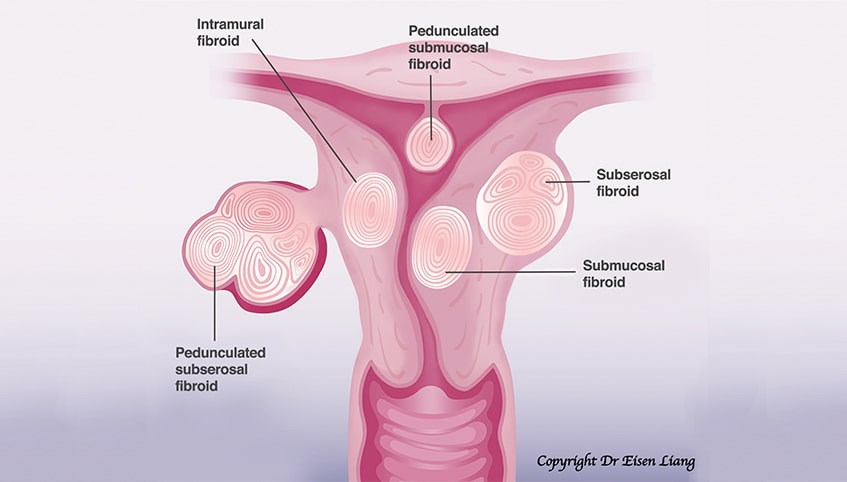
Uterine fibroids are benign growths arising from the muscle of the uterus. They can cause symptoms such as:
- Heavy menstrual bleeding
- Painful periods
- Pelvic pain or pressure
- Abdominal swelling
- Frequent urination
- Fertility or pregnancy problems
The most appropriate fibroid treatment depends on your symptoms, the size and location of your fibroids, your age, your general health and whether you are planning a future pregnancy.
This guide from Sydney Fibroid Clinic summarises the main treatments for uterine fibroids. These include medical treatments, endometrial ablation, hysteroscopic resection, myomectomy, hysterectomy and uterine fibroid embolisation (UFE)—a minimally invasive, uterus-preserving alternative to hysterectomy.
Medical Treatments for Uterine Fibroids
Medical treatments may help control heavy menstrual bleeding and other symptoms. However, most medical treatments do not substantially shrink fibroids or prevent their underlying growth.
Tranexamic Acid
Tranexamic acid may be taken during menstruation to reduce heavy bleeding.
However, tranexamic acid:
- Does not shrink fibroids
- Does not stop fibroids from growing
- Does not treat pressure or bulk-related symptoms caused by large fibroids
Combined Oral Contraceptive Pill and Progestogen-Only Pill
The combined oral contraceptive pill and progestogen-only pill are commonly used to manage heavy menstrual bleeding and regulate menstrual cycles.
These medicines may improve bleeding symptoms, but they generally:
- Do not shrink fibroids
- Do not remove fibroids
- Do not reliably prevent fibroids from continuing to grow
If the fibroids enlarge, medical treatment may become less effective over time.
Ryeqo for Fibroids
Ryeqo is a combination hormonal treatment containing relugolix, oestradiol and norethisterone acetate.
It works by suppressing the body’s production of ovarian hormones and then providing a low dose of oestrogen and progestogen. This “add-back” component helps reduce some of the effects of low oestrogen.
Ryeqo can be effective in controlling heavy menstrual bleeding associated with fibroids. However, its effect on fibroid size is relatively modest compared with uterine fibroid embolisation.
Clinical trial data have reported approximately 12% reduction in fibroid volume after six months of Ryeqo treatment. By comparison, fibroids commonly shrink by approximately 50–60% in volume within six months after UFE, although individual results vary.
Important considerations include:
- Ryeqo must be taken every day.
- Symptoms may return after treatment is stopped.
- Possible side effects include hot flushes, headaches and changes in bleeding patterns.
- Bone mineral density may need to be considered, particularly with prolonged treatment or in women with risk factors for osteoporosis.
- PBS eligibility should be checked because currently does not include treatment of uterine fibroids.
Mirena IUD and Fibroids
The Mirena intrauterine device releases levonorgestrel, a type of progestogen, directly into the uterus. It thins the uterine lining and may reduce heavy menstrual bleeding.
However, Mirena:
- Does not shrink fibroids
- Does not stop fibroids from growing
- May be difficult to insert when fibroids significantly distort the uterine cavity
When the uterine cavity is distorted, the device may be more likely to move from its correct position or be expelled. Some women may also experience irregular bleeding, spotting, pelvic discomfort, mood changes, acne, breast tenderness or weight changes.
Mirena may be helpful for selected women whose uterine cavity is not significantly distorted by fibroids.
Endometrial Ablation
Endometrial ablation uses heat energy to destroy the lining of the uterus and reduce menstrual bleeding.
For the treatment to work effectively, the ablation heating device needs to make reasonably uniform contact with the uterine lining. If fibroids distort the uterine cavity, the heat energy may not be applied evenly, increasing the likelihood of incomplete treatment or treatment failure.
Endometrial ablation:
- Treats the uterine lining rather than the fibroids
- Does not shrink fibroids
- Does not treat pressure symptoms caused by fibroids
- May make period pain worse if adenomyosis is also present
- Is not suitable for women planning a future pregnancy
Hysteroscopic Fibroid Resection
Hysteroscopic resection is used to remove selected fibroids that project into the uterine cavity. A small camera and specialised surgical instrument are passed through the cervix, without an abdominal incision.
The procedure is most suitable when the fibroid is:
- Relatively small—less than 4 cm
- Located mainly within the uterine cavity
- Accessible through the cervix
For complete resection, a substantial proportion of the fibroid generally needs to project into the cavity.
Fibroids located mainly within the muscular wall of the uterus may not be suitable for hysteroscopic removal. These fibroids remain untreated and may continue to grow or cause symptoms—the so-called “iceberg effect.”
Myomectomy
Myomectomy is the surgical removal of individual fibroids while preserving the uterus. It may be considered particularly when future pregnancy is an important priority.
However, myomectomy can be a major and technically challenging operation because fibroids often have a rich blood supply.
Open Myomectomy
Open myomectomy requires an abdominal incision to access and remove the fibroids. Recovery commonly takes approximately four to six weeks.
Laparoscopic Myomectomy
Laparoscopic or keyhole myomectomy uses several smaller abdominal incisions. It can offer a shorter recovery than open surgery but may be technically demanding, particularly when fibroids are large, numerous or deeply embedded in the uterine wall.
The operation requires an appropriately trained, highly skilled and experienced gynaecological surgeon.
Myomectomy removes selected fibroids, but smaller / tiny fibroids left behind might contiue to grow. As a result, some women experience recurrent symptoms and may eventually require further treatment.
Hysterectomy
Hysterectomy is the surgical removal of the uterus. It permanently stops menstrual periods and prevents fibroids from recurring, but pregnancy is no longer possible.
Depending on the surgical approach, recovery may take several weeks.
Potential surgical risks include:
- Infection
- Haemorrhage or blood transfusion
- Blood clots
- Injury to the bladder, ureters, bowel or surrounding structures
- Anaesthetic complications
Possible longer-term concerns may include pelvic organ prolapse, urinary symptoms and changes in sexual function, although individual outcomes vary.
An observational Mayo Clinic study found that hysterectomy with ovarian conservation was associated with a 33% relative increase in the risk of coronary artery disease.
Uterine Fibroid Embolisation: A Minimally Invasive Alternative to Hysterectomy
Uterine fibroid embolisation, also called uterine artery embolisation, UFE or UAE, is a minimally invasive non-surgical and non-hormonal treatment for symptomatic uterine fibroids.
UFE is performed by an interventional radiologist. A fine catheter is inserted into an artery, usually through a tiny puncture in the groin. Small particles are then delivered into the uterine arteries to reduce the blood supply to the fibroids. The fibroids subsequently die and shrink, while the uterus is preserved, due to abundance of dormant collateral arteries in the normal part of the urterus. This treatments all fibroids in the uterus, large or small, single or multiple. Fibroid recurrence after UFE is very rare.
MRI is required prior to UFE, to rule out the rare sarcomas (malignant fibroid).
Evidence Supporting UFE
Five randomised controlled trials have compared UFE with hysterectomy. These studies have found substantial and durable improvements in fibroid symptoms and quality of life following UFE. Cochrane review in 2014 concluded that there is no major difference between UFE and hysterectomy in terms of symptom releif and qoulity of life improvement.
Potential Benefits of UFEUFE offers several advantages:
- No open surgical incision
- Usually performed under local anaesthetic with sedation
- Much lower risk of major bleeding than surgery
- No risk of direct surgical injury to adjacent pelvic organs
- Usually a one-night hospital stay
- Approximately one to two weeks of recovery for many patients
- Preservation of the uterus, possible for future pregnancy in some women
- Treatment of multiple fibroids during the same procedure
- Suitable for postmenopausal women with symptomatic fibroid but needing MHT
Unlike myomectomy, which removes selected fibroids, UFE generally treats all fibroids receiving blood from the uterine arteries—including smaller fibroids that may not be suitable for individual surgical removal.
UFE can be combined with hysteroscopic resection if one or more fibroids are in or near the cavity. UFE can be combines with delayed laporaoscopy myomectomy to reduce bulk and make the uterus more suitable to carry pregnancy. Delayed myomectomy after UFE is usually safer, with smaller shrunken fibroids and much less bleeding. This combination treatment is very useful in dealing with surgically challenging large fibroids.
No procedure is completely risk-free. UFE has recognised risks and is not the right treatment for every woman. Careful assessment by an experienced fibroid specialist and interventional radiologist is therefore important.
Which Fibroid Treatment Is Best?
There is no single fibroid treatment that is best for every woman.
Treatment should be tailored according to:
- The severity and type of symptoms
- Fibroid size, number and location
- Whether the uterine cavity is distorted
- Age and proximity to menopause
- General medical health
- Previous treatments
- Future pregnancy plans
- Personal preferences about surgery, recovery and uterine preservation
Some women may benefit from medical treatment alone. Others may require hysteroscopic resection, myomectomy, hysterectomy or uterine fibroid embolisation. In selected cases, treatments may be combined to achieve the best outcome while preserving the uterus.
Fibroid Treatment at Sydney Fibroid Clinic
At Sydney Fibroid Clinic, fibroid treatment is individually planned according to each woman’s symptoms, imaging findings, fibroid characteristics and personal preferences.
Dr Eisen Liang, an experienced Sydney interventional radiologist, specialises in uterine fibroid embolisation in Sydney as a minimally invasive alternative to hysterectomy.
Where appropriate, Sydney Fibroid Clinic may combine medical treatment, UFE and adjunct minimally invasive gynaecological procedures to help women manage their symptoms and avoid hysterectomy.
A detailed consultation with a specialist who understands the full range of fibroid treatment options is important. This allows you to compare the benefits, risks, recovery times and long-term outcomes before deciding which treatment is most suitable for you.
About the author: Dr Eisen Liang graduated from UNSW. He founded Sydney Interventional Radiology and Sydney Fibroid Clinic. He has clinical and research interests in gynaecological interventions. He works closely with gynaecologists, running joint clinics with a focus on uterine sparing treatment options for women. His case series on UAE for fibroids and adenomyosis have been published in ANZJOG in 2012, 2018 and 2021.
This information is general in nature and is not a substitute for personalised medical advice.